Destinations

Destinations

Ngorongoro Conservation Area

Ngorongoro Conservation Area The Ngorongoro Conservation Area is a vast and stunning protected area in northern Tanzania, renowned for being home to the world’s largest intact volcanic caldera. Often called “Africa’s Garden of Eden,” the Ngorongoro Crater is a natural enclosure created by the collapse of a massive volcano millions of years ago. This breathtaking landscape comprises the main caldera, but also includes the smaller, active Olmoti and Empakaai craters, and the important Olduvai Gorge, a pivotal paleoanthropological site. The area covers 8,292 square kilometers and was established as a multiple-use land in 1959, uniquely designated to protect both its incredible wildlife and the rights of the indigenous Maasai people who live and herd their cattle within its boundaries. It was declared a UNESCO World Heritage Site in 1979, recognized for both its natural and cultural significance. ClimateThe climate is generally mild and temperate due to the high altitude. The area experiences a similar pattern to the wider region, with a main wet season from March to May and a shorter rainy period in November. The dry season from June to October offers the best game viewing as animals congregate around permanent water sources. The altitude ranges from 1,020 meters in the Salei Plains to 3,648 meters at the summit of Mount Loolmalasin, creating a dramatic and varied landscape. Getting ThereThe Ngorongoro Conservation Area is a central part of Tanzania’s Northern Safari Circuit. It is easily accessible by road, located approximately 180 km west of Arusha. The journey by car takes about 3-4 hours. The main entry gate is at Loduare, near the town of Karatu. Visitors descend into the crater floor via steep, winding access roads from the crater rim. Many travelers arrive via Kilimanjaro International Airport, which is about a 4-hour drive away. AttractionsThe Ngorongoro Conservation Area, a UNESCO World Heritage Site, offers the unparalleled attraction of the Ngorongoro Crater itself—a self-contained world teeming with an estimated 25,000 large animals. This “eighth wonder of the world” provides one of Africa’s most reliable game-viewing experiences, including the Big Five, with a high chance of spotting the endangered black rhinoceros. Beyond the crater, the area boasts the archaeological wonders of Olduvai Gorge, where some of the earliest human fossils were discovered. The stunning Empakaai Crater, with its deep soda lake, and the shifting sands of the Ndutu area provide additional unique landscapes. The presence of the semi-nomadic Maasai people, who coexist with the wildlife, adds a profound cultural dimension to the visit, making it a truly holistic African experience. Start Planning Your Dream Safari Today START PLANNING Create your own experience At Parks Adventure, every journey is more than just a tour , it’s a story worth sharing. Here’s what our happy travelers have to say after exploring Tanzania’s breathtaking national parks with us: WRITE US A REVIEW

Destinations

Arusha National Park

Arusha National Park Nestled in northern Tanzania, Arusha National Park is a breathtaking gem characterized by its incredible diversity and stunning scenery. Despite its relatively small size, the park offers a dramatic landscape dominated by Mount Meru, the fifth-highest mountain in Africa at 4,566 meters. The park also encompasses the scenic Momella Lakes and the lush crater of Ngurdoto Mountain, often called “Little Ngorongoro.” The park covers 552 square kilometers and was established as a National Park in 1960. It was formally gazetted under its current name to protect its unique ecosystems. While not a UNESCO World Heritage Site itself, it lies in the shadow of Mount Kilimanjaro, which holds that designation. ClimateThe park enjoys a pleasant climate due to its altitude. It experiences two rainy seasons: the “long rains” from March to May and the “short rains” from November to December. The dry season from June to October offers the best visibility for viewing wildlife and the stunning peaks. The park’s altitude ranges from 1,500 meters at the Momella Lakes to 4,566 meters at the summit of Mount Meru, creating a variety of microclimates. Getting ThereArusha National Park is the most accessible northern circuit park, located just a short drive from the city of Arusha. The park can be reached by road in about 40 minutes from Arusha town and approximately 60 km from Kilimanjaro International Airport. The main gate, known as the Ngongongare Gate, is easily accessible, with other entry points like the Momella Gate servicing specific activities like the start of the Mount Meru climb. AttractionsArusha National Park offers a spectacular and condensed safari experience. Its crown jewel is Mount Meru, a dormant stratovolcano and the perfect training climb for those attempting Kilimanjaro. The park’s varied habitats include the tranquil Momella Lakes, known for their shimmering waters and flocks of flamingos, and the Ngurdoto Crater, a forested caldera teeming with wildlife. Visitors can enjoy unique activities such as canoe safaris on the lakes and guided walking safaris, which are rare in Tanzania’s northern parks. The park is also a birdwatcher’s paradise with over 400 species recorded, and it provides stunning, picture-perfect views of the majestic Mount Kilimanjaro on clear days. Start Planning Your Dream Safari Today START PLANNING Create your own experience At Parks Adventure, every journey is more than just a tour , it’s a story worth sharing. Here’s what our happy travelers have to say after exploring Tanzania’s breathtaking national parks with us: WRITE US A REVIEW

Destinations

Tarangire National Park

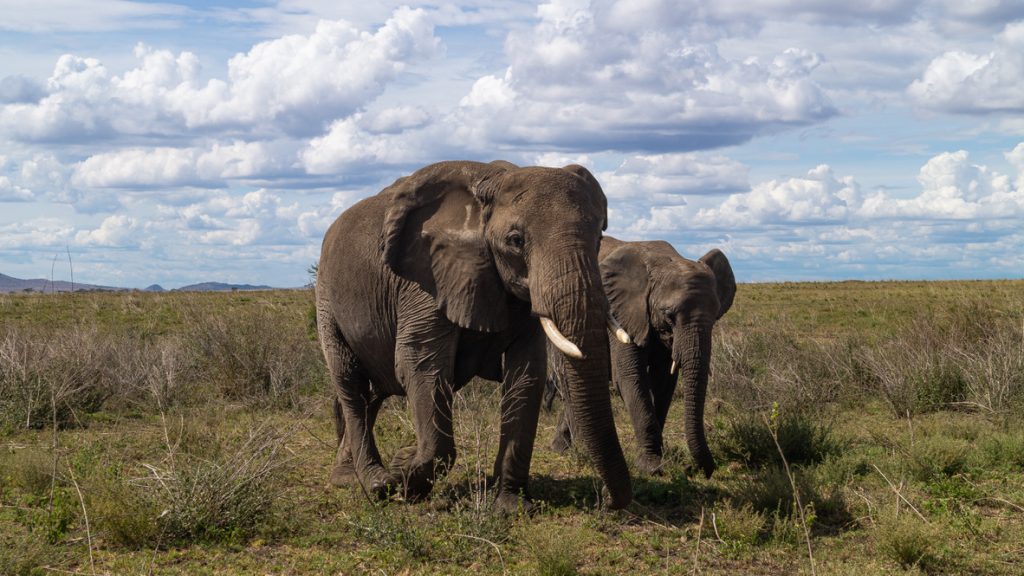
Tarangire National Park Tarangire extends to you a very cordial welcome. We are thrilled to have you here and appreciate you trusting us with your visit. Whether you are here for a day trip or an overnight stay, Tarangire has something for everyone. The park is splendidly known for its famous concentration of wild animals, especially elephants, and is also one of the finest birding destinations in East Africa. The park’s name originates from the Tarangire River that crosses through it, and it covers an area of 2,850 square kilometers. ClimateTarangire experiences a bimodal rainfall pattern, with short rains from November to December and long rains from March to May. The dry seasons run from June to October and again from January to February. The park is located at an altitude between 900 and 1,250 meters, with an annual average rainfall ranging from 650 to 700 mm. Getting ThereThe park can be accessed by both road and air. By road, it is located 121 km from Arusha city via a tarmac road. By air, the park can be reached by flight from Kilimanjaro International Airport (46 km from Arusha). Chartered flights are also available from Arusha to the Kuro Airstrip, which is located inside the park. AttractionsThe park’s remarkable attractions include large herds of elephants, the spectacular natural beauty of its savanna landscape, and magnificent, majestic baobab trees. Over 550 different bird species have been recorded in the park, several of which are threatened or endemic. The Tarangire River acts as a vital lifeline, drawing incredible concentrations of wildlife, especially during the dry season, creating an unforgettable safari experience. Start Planning Your Dream Safari Today START PLANNING Create your own experience At Parks Adventure, every journey is more than just a tour , it’s a story worth sharing. Here’s what our happy travelers have to say after exploring Tanzania’s breathtaking national parks with us: WRITE US A REVIEW

Destinations

Mount Kilimanjaro

Mount Kilimanjaro The highest mountain in Africa, Kilimanjaro is a snow-capped peak and the world’s highest free-standing volcano. It comprises two dormant volcanoes—Kibo (5,895 m) and Mawenzi (5,149 m)—and one extinct volcano, Shira (3,962 m). The origin of the name “Kilimanjaro” is not certain, but it is said to be a combination of the Swahili word “Kilima” (mountain) and the KiChagga word “Njaro” (whiteness), giving it the name “White Mountain.” The park covers 1,712 square kilometers and was declared a National Park in 1973, officially opening for tourism in 1977. It was declared a UNESCO World Heritage Site in 1987 and a Natural Wonder of Africa in 2013. Climbing to the summit, far up into the sky, is a lifetime experience that no one forgets. ClimateThe park experiences two rainy seasons. The main wet season is from March to May, when it rains around the mountain base and snow accumulates on its peak. The dry season runs from late June through September, featuring cool nights and clear days. The park’s altitude ranges from 1,700 meters to 5,895 meters, with annual rainfall varying from 828 mm in the alpine desert to 2,500 mm in the Montane forest. Getting ThereThe starting point for the popular Marangu route is easily accessible. The park can be reached by road or by flight via Kilimanjaro International Airport, located about 45 km to the west. The Park Headquarters and one of the main gates are at Marangu, about 41 km from Moshi town and 86 km from the airport. Seven other gates—Rongai, Machame, Londorosi, Lemosho, Kilema, Mweka, and Umbwe—are located around the mountain base and are also reachable by road. AttractionsKilimanjaro National Park, a UNESCO World Heritage Site, offers the unique and breathtaking attraction of being the highest mountain in Africa and the world’s tallest free-standing volcano. The legendary snow-capped peak, with its Kibo and Mawenzi volcanic cones, presents the ultimate challenge for adventurers via its iconic climbing routes. The mountain’s extraordinary ecological zones, which range from lush rainforest to alpine desert and the arctic summit, create a spectacular natural journey. The stunning glaciers, dramatic volcanic landscapes like the Ash Pit, and the unparalleled sunrise view from Uhuru Peak provide unforgettable experiences for trekkers and nature enthusiasts alike. Start Planning Your Dream Safari Today START PLANNING Create your own experience At Parks Adventure, every journey is more than just a tour , it’s a story worth sharing. Here’s what our happy travelers have to say after exploring Tanzania’s breathtaking national parks with us: WRITE US A REVIEW

Destinations

Serengeti National Park

Serengeti National Park Maasai people called this park ‘Siringet‘, meaning endless plains. The Serengeti speaks for itself and with good reason not only the migration of over 1 million wildebeest through its plains and woodlands but also unique landscapes and other spectacular wildlife. The Serengeti is home to the world’s largest populations of Wildebeest, Zebra, Cape Eland, Lion, Cheetah, Hyena and Gazelles. The scenic beauty of the sky with cool nights and warm days makes your visit to this remaining home for great migration of large mammals incredible! Climate The climate of the Serengeti National Park is subtropical, with rain season from November to April and dry season from May to October. The park is located at an altitude between 1,100 and 2,000 meters with annual average rainfall ranging from 900 to 1,000 mm. Getting there Road. Accessed from all towns and cities to the present entry or exit points/gates namely Naabi Hill, Seronera, Ndutu, Kusini, Kirawira, Handajega, Ikoma, Tabora ‘B’, Lamai, Lobo, Ndabaka, Machochwe and Kleins.Air. There are all weather airstrips in the center of the park (Seronera), in the South (Kusini), in the East (Lobo), in the West (Kirawira) and in the North (Kogatende & Lamai). There are scheduled and private charters from Arusha, Mwanza, Kilimanjaro, Musoma, Dar es salaam and Zanzibar. Attraction Serengeti National Park, a world-renown, World Biosphere Reserve and World Heritage Site that has many attractions than any other national park in Africa. The Great Migration, The Big Five, Unique Bird Collections, Endangered Species, Highest concentration of Carnivores and Herbivores, Scenic and Spectacular Landscapes are some of the attractions one will encounter! Start Planning Your Dream Safari Today START PLANNING Create your own experience At Parks Adventure, every journey is more than just a tour , it’s a story worth sharing. Here’s what our happy travelers have to say after exploring Tanzania’s breathtaking national parks with us: WRITE US A REVIEW

Scroll to Top